Body Corp & Apartment Block Exterior Cleaning in Wellington
Body-corp exterior cleaning is different from residential, scaffold or pole work, resident coordination, approval thresholds, and cost-sharing for AGM presentation.
A body-corp clean isn't a bigger residential job, it's a different operation. Larger scale, coordinated resident access, pole or scaffold work on multi-storey, and documentation that meets body-corp governance requirements.
James works with body-corp committees, strata managers and property management firms across Wellington on annual and as-needed exterior cleaning contracts. Quote format is AGM-ready by default.
- $800–1,80010-unit townhouse complex
- $1,500–3,50020-unit low-rise apartment
- $80–180per-unit (typical)
- 5 daysresident notice (standard)
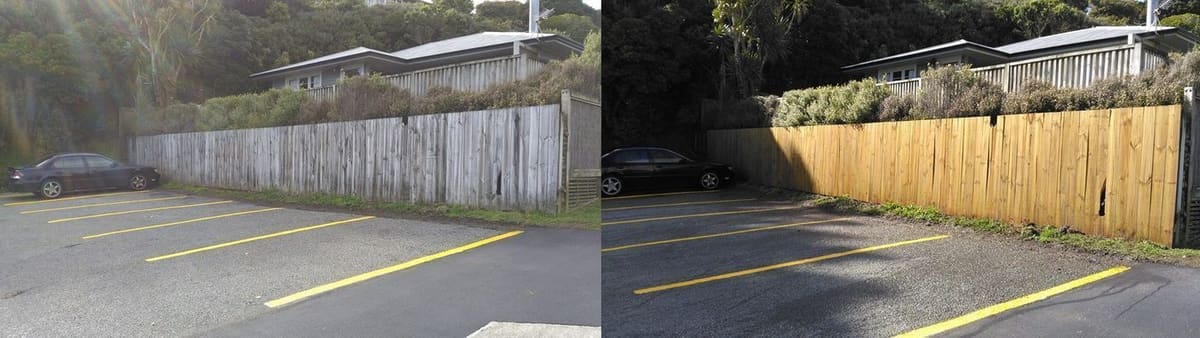
Body corp wash to schedule? James works with body-corp committees and strata managers across Wellington, portfolio details here or request a quote.
A body-corp exterior clean is not a bigger version of a residential house wash. The scope, the logistics, the pricing structure, and the documentation requirements are all different. Most body-corp committees find that out when they try to use a standard residential quote for a block and end up with a price that either doesn’t reflect the actual work, or arrives in a format that can’t be presented at an AGM.
This guide is for body-corp chairs, strata managers, and property managers who want to understand how exterior cleaning works for Wellington apartment blocks and townhouse complexes, from pricing to scheduling to Health and Safety compliance.
Property types James works with
Apartment blocks, CBD, Te Aro, Oriental Bay, Mt Cook
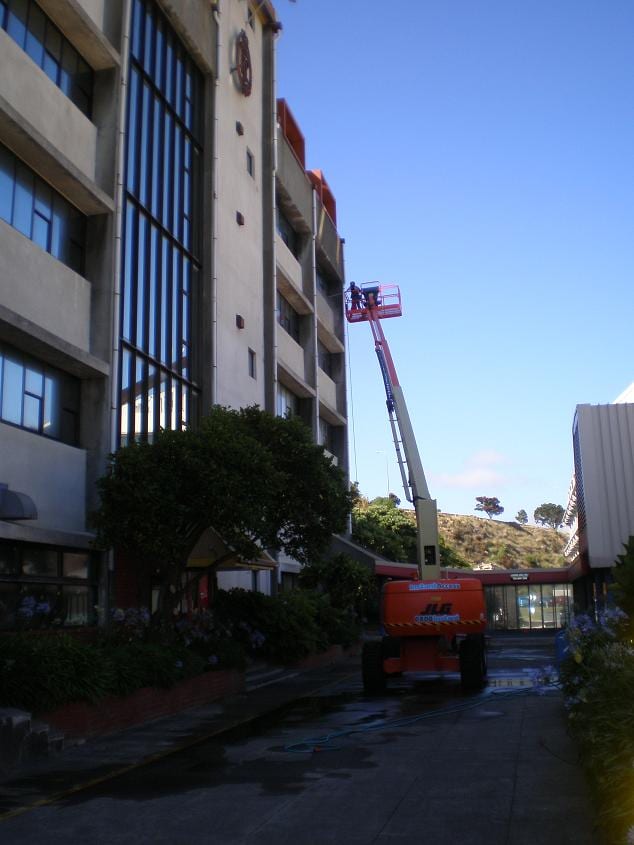
Multi-storey residential apartments are the most technically complex exterior cleaning job in the Wellington market. Access is the defining constraint: the upper floors require either scaffold, high-reach poles, or specialist high-access equipment.
For buildings up to 4–5 storeys, extended-pole soft-wash systems are typically the right tool. Beyond that, scaffold or cherry picker access is required, those jobs are coordinated with a scaffolding contractor and priced accordingly.
The Wellington CBD, Te Aro, and Oriental Bay have the highest concentration of apartment blocks. Waterfront apartments on Oriental Bay have a salt-spray exposure profile that requires specific chemistry, salt-neutralising biocide as part of the wash formulation, not just standard mould treatment.
Townhouse complexes, Whitby, Churton Park, Newlands, Tawa
Body-corp townhouse developments in Wellington’s northern suburbs are a common job type. These are typically 2–4 storey, owner-occupied or investor-owned units in strata-titled complexes. The exterior is shared property managed under the body-corp rules.
Townhouse complex cleans are often more straightforward from an access perspective than apartment blocks, but they involve the same body-corp governance requirements: a scope of work presented to the committee, a formal quote, and documentation on completion.
Low-rise body corp, Mt Cook, Newtown, Kilbirnie, Brooklyn
Older low-rise body-corp buildings, 1960s–1980s walk-up apartments, often in brick or painted concrete, are a regular part of the Wellington market. These are typically 2–3 storeys and accessible with standard equipment or extended poles.
Heritage-era body-corp buildings in Mt Cook and Newtown sometimes have painted surfaces that need the same soft-wash care as heritage residential properties. The method depends on the cladding type and surface condition, not just the building category.
How body-corp pricing works
Body-corp exterior cleaning is typically quoted per-building rather than per-unit, because the work is done to the building exterior as a whole. The per-unit breakdown is provided separately, useful for AGM cost-sharing discussions and for levy allocation purposes.
What drives the price:
- Number of storeys and access method required
- Linear metres of cladding surface
- Number of units contributing to the common area exterior
- Condition and cleaning history (heavily soiled or neglected surfaces take longer)
- Site access, tight urban sites in the CBD vs spacious townhouse complexes differ significantly
Typical Wellington ranges:
- 10-unit townhouse complex, single access: $800–$1,800 per clean
- 20-unit low-rise apartment block, standard access: $1,500–$3,500
- Larger complex or multi-storey with pole access: quoted on site
These are whole-building figures. On a per-unit basis, the cost is generally modest when divided across the complex, $80–$180 per unit for a standard townhouse complex is a typical outcome.
Cost-sharing transparency for AGM presentation
The quote format matters. Body-corp committees usually need to present the spend to owners before approving it. James provides quotes in an AGM-ready format by default, scope in plain language, per-unit cost breakdown, frequency recommendation, before-and-after documentation commitment, optional annual contract pricing.
James can provide quotes in a format suitable for AGM presentation, including:
- Scope of work in plain language (what surfaces, what method, what’s excluded)
- Per-unit cost breakdown
- Frequency recommendation with justification
- Before-and-after documentation commitment
- Annual contract pricing if a rolling schedule is preferred
If the body-corp has an approval threshold, typically any expenditure above a certain dollar amount requires a body-corp vote, the quote format and any contract terms can be structured to meet that requirement. Flag this when requesting a quote.
Scheduling around residents
Apartment and townhouse residents can’t all be avoided, but the disruption can be managed. Standard approach for a body-corp clean:
Notice period: At least 5 working days written notice to all affected residents, typically distributed by the body-corp manager. James can provide a standard notice template covering what work will be done, what residents need to do (keep windows closed, remove items from balconies), and what to expect.
Working hours: Standard hours are Monday–Saturday, 8am–6pm. For buildings with noise-sensitive occupants or specific strata rules about working hours, James can discuss the scheduling constraints when quoting.
Balcony and deck considerations: Where resident balconies form part of the common property exterior, they’re included in the building clean. Personal items, furniture, pot plants, stored equipment, need to be moved before cleaning. The notice to residents covers this.
Weekend vs weekday: For CBD and Te Aro apartment blocks where most occupants are working, weekday scheduling minimises the number of residents affected during the working day. For family-heavy townhouse complexes, weekday mornings often work better than weekends.
Water access on apartment blocks
Standard residential jobs use the property’s garden tap. Apartment blocks often don’t have a convenient external tap accessible to the cleaning contractor.
Water access solutions for apartment blocks:
- In-building tap connection via building manager (most common for newer apartments)
- Portable water tank (James carries a 200L tank for sites without direct access)
- Mains connection via a temporary fitting
This is a logistics question worth discussing at quote stage, not a problem, but it does affect job planning and sometimes job duration.
Documentation for body-corp records
Body-corp governance requires maintenance records. James provides:
- Before-and-after photos of all treated building surfaces
- Job record: date, scope, surfaces treated, method used
- Certificate of completion signed and dated
This documentation goes into the body-corp maintenance register, which is useful for: building insurance purposes, levy adjustment discussions, pre-sale building reports, and future body-corp meeting records.
Pre-paint preparation tie-in
Many body-corp buildings schedule exterior painting every 8–12 years. Exterior washing is the required preparation step before paint goes on, dirty or mould-affected cladding prevents proper paint adhesion and voids most paint warranties.
James works with painting contractors on pre-paint preparation washes. If the body-corp is planning a painting contract, the exterior clean can be timed to happen 1–2 weeks before the painters arrive, giving the surface time to dry completely.
Coordinating the clean and paint as a package, with a single body-corp approval covering both, simplifies the governance process and reduces the number of separate contractor engagements to manage.
Regulatory compliance, Health & Safety at Height
External cleaning on multi-storey buildings triggers Health and Safety at Work Act (2015) obligations, specifically around working at height. The relevant considerations for a body-corp commissioning cleaning work:
Contractor PCBU obligations. The cleaning contractor is a PCBU (Person Conducting a Business or Undertaking) and is responsible for managing their own safe work system. James holds current Site Safe certification and carries public liability insurance.
Height work method. Any work above 3 metres involves a working at height plan. For extended-pole systems this is less complex than scaffold or rope access, but the risk is still assessed and managed.
Public liability insurance. James is fully insured for public liability. The body-corp should request evidence of current insurance before approving any contractor working on common property.
Site Safe certification. Ask any contractor working on a body-corp building for their Site Safe card or equivalent. It’s standard in the industry for anyone working on commercial or multi-occupancy sites.
Individual unit owner vs body-corp scope
A common question: can an individual unit owner contract James for their unit’s exterior, rather than going through the body-corp?
The answer depends on your body-corp rules. In most Wellington strata developments, the building exterior is common property and maintenance must be approved by the body-corp. Individual unit owners generally can’t engage contractors for work on the common property exterior without committee approval.
What individual owners can typically arrange independently: balcony deck cleaning (if the balcony is unit property rather than common property), internal window cleaning, private courtyard cleaning. Anything that touches the building exterior proper usually needs to go through the body corp.
If you’re an owner who wants the building exterior cleaned and the body-corp hasn’t acted on it, the most effective path is raising it at the next committee meeting or AGM with a quote already in hand.
Common questions
Who pays, the body-corp levy or individual owners?
Body-corp exterior maintenance is typically funded from the maintenance levy or reserve fund, not billed to individual owners separately. The cost is spread across all owners in the body-corp as part of the annual maintenance budget. How the levy is structured, equally per unit or by entitlement share, depends on the specific body-corp rules.
Can individual unit owners contract James directly?
For the building exterior, only with body-corp approval. For privately owned spaces (balconies, courtyards, garages that are unit property), yes, that’s between you and James without body-corp involvement needed.
Do you do high-rise?
For buildings above 5–6 storeys requiring rope access or cherry picker, James coordinates with specialist access contractors. The cleaning scope is James’s; the access method and equipment is the specialist’s. These jobs are quoted after a site visit.
How often should an apartment block be cleaned?
Wellington’s climate typically warrants once a year for buildings in shaded urban locations, once every 12–18 months for well-exposed suburban locations. Salt-exposed coastal buildings (Oriental Bay waterfront, Petone foreshore) should be washed twice a year.
Do you provide an annual contract?
Yes. Rolling annual contracts for body-corp complexes are available with fixed pricing and priority scheduling. This is especially useful for townhouse complexes with a regular AGM cycle, the cleaning contract can be presented at the AGM and renewed annually.
Written by James · Clear Water Blasting Services
Owner-operated since 2001 from Johnsonville. James does every quote and every job himself across Wellington, the Hutt, Kapiti, Porirua and the Wairarapa.
From the blog
Most recent posts

House washing in Wellington's coastal suburbs, Lyall Bay, Kilbirnie, Seatoun, Island Bay and Miramar
Why coastal Wellington homes age twice as fast, and what to do about it. A practical guide to salt-spray, southerly exposure and the cleaning regime that actually works.
Read →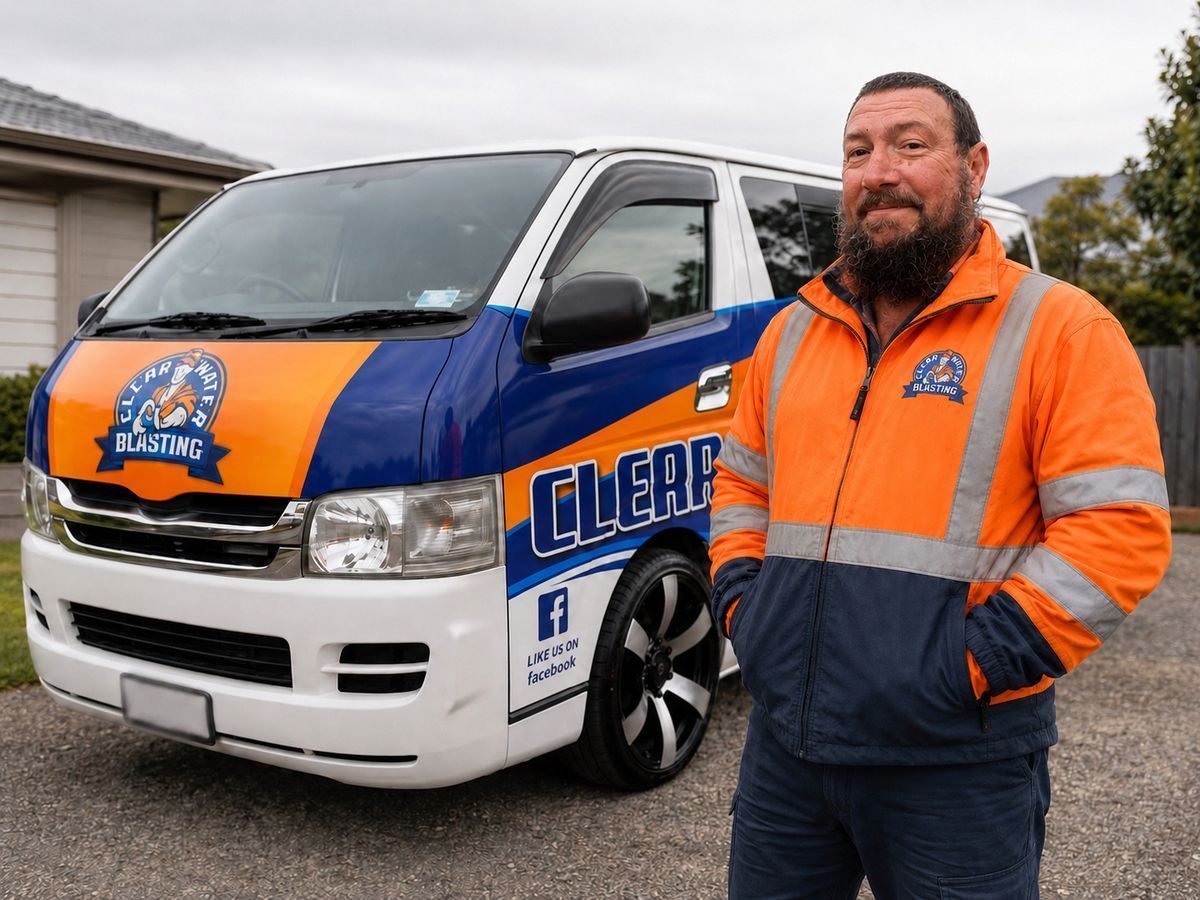
Soft wash vs water blasting: which does your house actually need?
Same trade, two very different tools. Soft wash protects painted surfaces; water blasting strips them. Knowing the difference matters.
Read →
Moss treatment in Wellington: soft wash, spray, or scrape, which actually works?
Wellington's damp climate grows moss faster than almost anywhere in NZ. Three treatment methods, which one fits your roof and walls, what each costs, and how long results last.
Read →


