Soft wash vs water blasting: which does your house actually need?
Same trade, two very different tools. Soft wash protects painted surfaces; water blasting strips them. Knowing the difference matters.
Not sure which method your property needs? Tell James what surfaces you want cleaned, free quote with the right method for each surface, back inside 24 hours.
Soft wash: 200–500 PSI + biodegradable chemistry. For painted weatherboard, roofs, plaster.
Water blasting: 2,500+ PSI water alone. For concrete, paths, driveways.
Cost of confusing them: a $12,000 repaint instead of a $400 wash.
Pressure-cleaning and chemical-cleaning are different trades that look the same to most homeowners. They use the same kind of gear, the operator looks the same in hi-vis, and the result both times is a clean house. But the method matters more than the result, because the wrong method on the wrong surface can do real damage that takes years to show up, and thousands of dollars to fix.
Soft wash
200–500 PSI + biodegradable detergent
Chemistry does the work; water just rinses. Right for painted weatherboard, plaster, brick, roofs, joinery.
Water blasting
2,500+ PSI water alone
Water does the work physically. Right for concrete, pavers, paths, asphalt, never on painted surfaces or roof coatings.
Here’s the difference, what each is for, and how to tell whether the person quoting you is using the right one.
The two methods, in one paragraph each
Water blasting runs high-pressure water, usually 2,500 PSI and up, through a wand or rotary surface cleaner. The water does the work. It’s the right tool for concrete, pavers, brick paving, exposed aggregate, asphalt and similar hard, non-coated surfaces. Stripping moss out of paver joints, lifting tyre marks off a driveway, blasting bird-dropping crust off a concrete patio, all classic water-blasting jobs.
Soft washing runs water at low pressure, 200 to 500 PSI, sometimes less, with a biodegradable detergent mixed in. The chemistry does the work; the water is mostly a delivery system and a rinse. It’s the right tool for anything painted, coated, sealed, or otherwise vulnerable to high-pressure water: weatherboard, plaster, brick veneer, painted brick, concrete tile roofs, Decramastic, colorsteel, terracotta, painted joinery, lime render. Most exterior cleaning on most houses is soft washing.
The shorthand:
- Hard, bare, tough → water blasting
- Painted, coated, soft or old → soft wash
Why high pressure on paint is bad
High-pressure water is excellent at removing things that are stuck on. It’s also excellent at removing things that are stuck down, paint film, lime-render coating, varnish on timber, sealant in joints. A pressure washer doesn’t know the difference between mould on top of paint (the thing you want to remove) and the paint itself (the thing you want to keep).
What you typically get from high-pressure blasting on painted weatherboard:
- Visible strip lines where the wand worked too close
- Paint micro-fractures, not visible immediately but trap moisture for the next 12 months
- Lifted edges at the bottom of each weatherboard
- Water driven behind the boards through laps and joints, weeks to dry, can rot framing if it's a habit
The real problem: damage isn't visible the day the job's finished. The house looks great. The paint film is wounded. Two years later it's failing in patches, and the homeowner gets a $12,000 paint quote, while the original blaster's long since been paid.
This is the single most common avoidable expense in Wellington home maintenance.
Why low pressure on hard surfaces doesn’t work
The opposite mistake, soft washing a concrete driveway, isn’t damaging, just ineffective. Low-pressure water with chemistry can’t dig into the pores of concrete or the joints between pavers. It cleans the top layer of grime and leaves the ground-in dirt, moss roots and tyre-mark depth untouched.
If your driveway came back looking patchy or “kind of clean”, the contractor may have soft-washed it instead of blasting it. The fix is a proper blast, but the time wasted is on them, not you.
What needs what, practical guide for Wellington homes
| Surface | Method |
|---|---|
| Painted weatherboard | Soft wash (always) |
| Painted plaster | Soft wash |
| Painted brick | Soft wash |
| Bare brick (unpainted) | Soft wash with chemistry; sometimes light pressure |
| Concrete tile roof | Soft wash |
| Decramastic roof | Soft wash |
| Colorsteel / Metalcraft | Soft wash |
| Terracotta tile roof | Soft wash, never high pressure |
| Aluminium joinery | Soft wash |
| Concrete driveway / path | Water blasting |
| Aggregate concrete | Water blasting (careful pressure) |
| Coloured-press concrete | Lower pressure + colour-safe detergent |
| Brick pavers | Water blasting with pre-treatment |
| Asphalt | Water blasting |
| Timber deck | Wood-safe chemistry at low pressure |
| Timber fence | Wood-safe chemistry at low pressure |
Wellington-specific cases that trip people up
A few situations come up so often in Wellington-specific work that they’re worth flagging:
Coloured-press concrete driveways. Khandallah, Karori, Newlands, many of these properties have coloured-press concrete (the patterned stuff with integrated colour). Standard high-pressure water blasting exposes the aggregate underneath and strips out the colour permanently. The right approach is a controlled lower pressure plus a colour-safe detergent. The wrong contractor will tell you this can’t be cleaned, what they mean is they don’t know how. The right contractor will quote the lower-pressure method specifically.
Heritage Kelburn and Wadestown timber. Century-old painted timber doesn’t take high pressure. End of story. If a contractor quotes a heritage Wellington property and mentions “water blasting” without clarifying soft wash, they’re either inexperienced or planning to do the wrong thing. The right approach for these properties is soft wash exclusively, and lower pressure than the modern weatherboard standard at that.
Two-storey properties with Decramastic roofing. The chipped finish on Decramastic is what makes it look like tile rather than corrugated iron. High pressure literally blows the chip layer off. Soft wash is mandatory.
Tile roofs near the coast (Island Bay, Petone foreshore). Salt crystals get into the joints between tiles and into the laps. High pressure forces salt water deeper into the roof structure. Soft wash + dwell + gentle rinse is the right method, and a salt-neutralising chemistry is the right detergent.
How to tell during the quote
A contractor who knows what they’re doing will tell you what method they’re using before you ask. A good quote includes:
- The method: “soft wash for the house, water blasting for the drive”
- The pressure ranges, roughly: “around 300 PSI on the timber, 2,500 PSI on the concrete”
- The chemistry: “biodegradable detergent, plant- and pet-safe”
- What’s not being done: “we don’t high-pressure blast roof tiles or painted weatherboard”
Vague quotes that just say “house wash” or “exterior clean” without specifying method are a warning sign. Ask. The right answer should be specific and confident.
How to tell after the job
Five minutes after a soft-washed house has been rinsed off, the surface should look clean, even and matte-dry. There should be no visible water beading in a way that suggests the paint film has been compromised, and no strip-lines anywhere.
Five minutes after a water-blasted driveway has been rinsed off, the surface should be evenly clean from edge to edge, no patches, no curtain lines from the rotary cleaner overlapping unevenly, and no spots where moss has been pushed around rather than removed.
If your contractor’s leaving without taking before-and-after photos, that’s also a flag. A confident operator wants the visual record.
Want it done properly?
I quote each job with the method specified, and I do every wash myself, same person quoting, doing, photographing the result. Wellington-wide, 25 years on the tools.
James, Clear Water Blasting Services. The right method, every time.
Written by James · Clear Water Blasting Services
Owner-operated since 2001 from Johnsonville. James does every quote and every job himself across Wellington, the Hutt, Kapiti, Porirua and the Wairarapa.
From the blog
Most recent posts

House washing in Wellington's coastal suburbs, Lyall Bay, Kilbirnie, Seatoun, Island Bay and Miramar
Why coastal Wellington homes age twice as fast, and what to do about it. A practical guide to salt-spray, southerly exposure and the cleaning regime that actually works.
Read →
Moss treatment in Wellington: soft wash, spray, or scrape, which actually works?
Wellington's damp climate grows moss faster than almost anywhere in NZ. Three treatment methods, which one fits your roof and walls, what each costs, and how long results last.
Read →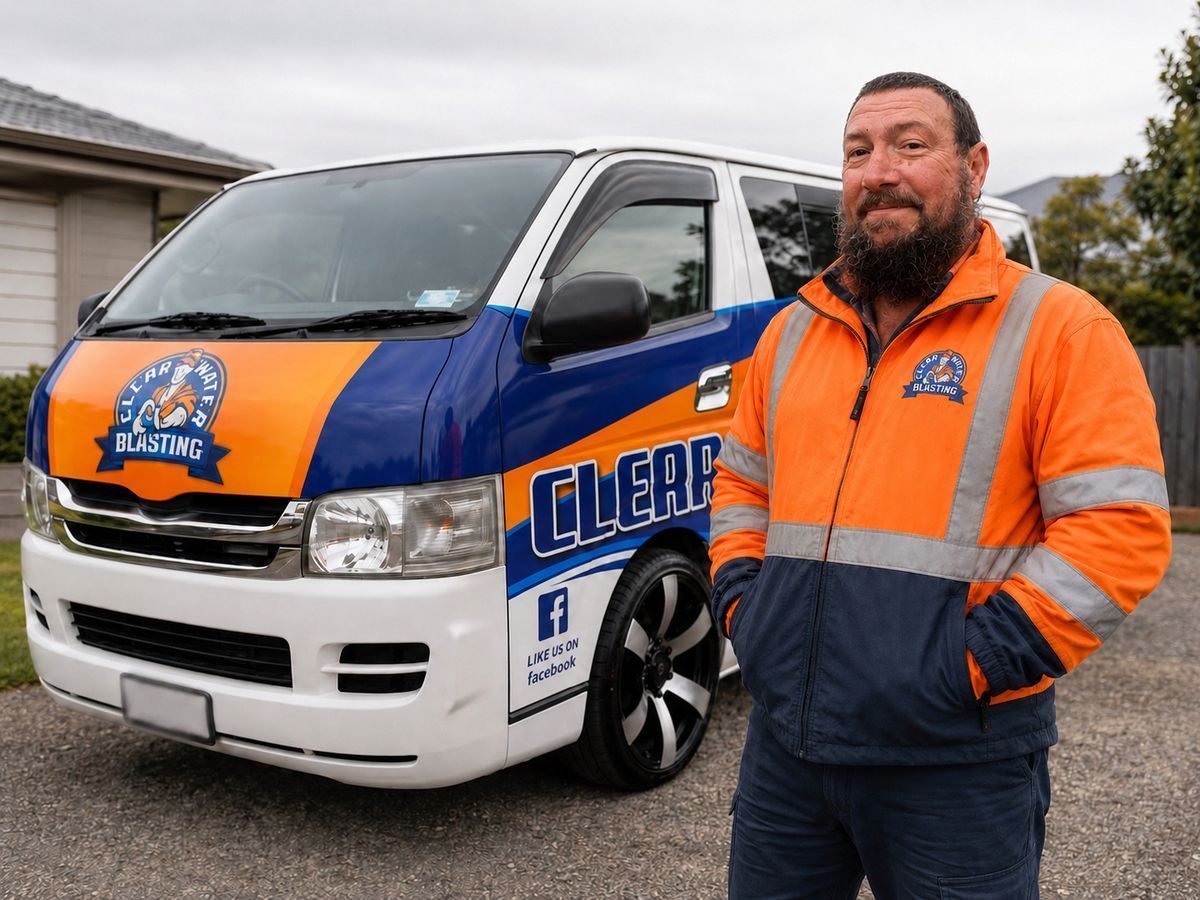
Solar panel cleaning in Wellington: when it's worth it, when it's not
Solar panels lose 5–25% output when dirty. Wellington gets salt, bird droppings and pollen. When cleaning pays back, when it doesn't, what method works.
Read →


