Is water blasting safe for paint? The straight answer.
Short answer: no, not on a painted house. Long answer involves PSI, paint age, paint type and what soft washing does instead. The full guide for Wellington homeowners.
Short answer: No, not on a painted house. High-pressure (2,500+ PSI) strips and damages paint film, sometimes invisibly until it fails 12–24 months later.
The fix: soft wash (200–500 PSI + chemistry) on painted surfaces; high pressure only on concrete and hard surfaces.
- 200–500PSI for soft wash (paint-safe)
- 2,500+PSI for water blasting (NOT for paint)
- 12–24 mountil invisible damage shows
- $10k+typical repaint after pressure damage
The short answer is no. High-pressure water blasting (2,500+ PSI) on painted weatherboard, plaster, brick, or any other coated exterior surface will damage paint, sometimes immediately and visibly, sometimes invisibly until the paint starts failing two years later.
The long answer is more useful. Because there’s also a method called “water blasting” that’s safe for paint, and the contractor that says “we water blast houses” might mean either thing. Knowing the difference is the difference between a clean job and a $10,000 repaint.
Two different methods, same name
Most NZ contractors use “water blasting” loosely. In practice there are two methods, and they’re not interchangeable:
| High-pressure water blasting | Low-pressure soft wash | |
|---|---|---|
| Pressure | 2,500–4,000+ PSI | 200–500 PSI |
| Water flow | High volume, narrow spread | Lower volume, wider spread |
| Method | Water does the work physically | Chemistry does the work; water just delivers |
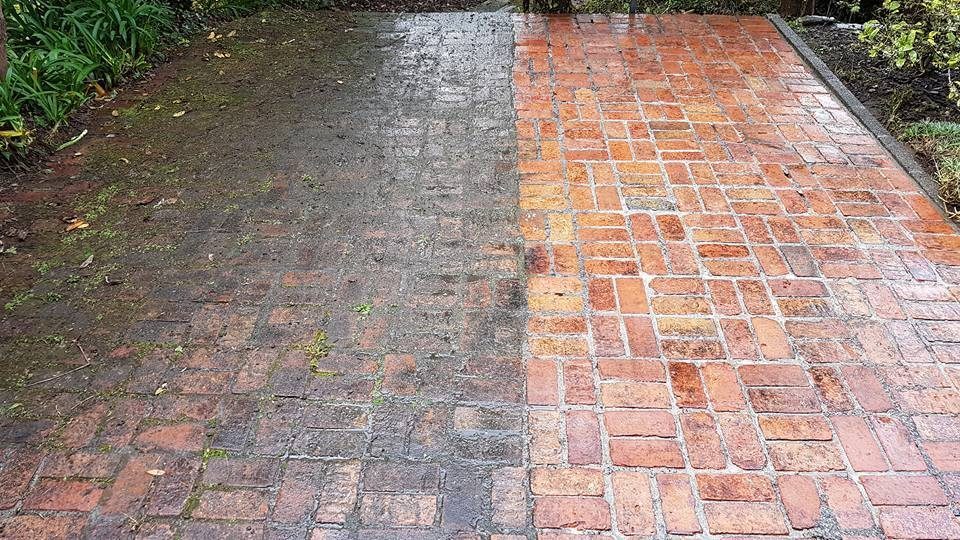
| Right for | Concrete, pavers, asphalt, paths, driveways | Painted weatherboard, plaster, brick, roofs, joinery |
| Wrong for | Anything painted or coated | Concrete with ground-in dirt or moss |
When you ask a contractor “do you water blast?” and they say yes, you need a second question: “On the house itself or only on the concrete?”
A competent contractor will answer that without hesitation: high pressure on the concrete, soft wash on the house. An incompetent or untrained one will say something like “yeah we use high pressure on everything.” That’s the warning.
What high-pressure water does to paint
Three things happen when you put 2,500+ PSI water on painted weatherboard:
1. Surface stripping (visible immediately)
The water physically removes paint film in narrow strips wherever the wand was held too close or too long. Look at a wand-blasted weatherboard from a low angle and you’ll see lighter “wand lines” where the spray pattern was concentrated.
This is the obvious damage. The contractor can see it. The homeowner usually doesn’t notice until a few weeks later in the right light.
2. Micro-fractures in the paint film (invisible for months)
Paint film is flexible but not infinitely so. High-pressure water at the wrong angle causes micro-fractures in the film that aren’t visible to the eye but trap moisture against the timber underneath. Over the next 6–24 months, water cycles in and out of these micro-fractures, lifting paint from the substrate from below.
You see this as paint peeling in patches about a year after a water blast. The owner thinks the paint was due to fail anyway. The contractor’s long gone.
3. Water driven behind weatherboard laps (immediate, can rot framing)
Weatherboard relies on overlapping boards to shed water down and out. High-pressure water from below or from the wrong angle drives water up under the laps, into the cavity between cladding and framing. This water then takes weeks to dry out. Done repeatedly over multiple cleaning cycles, it rots framing.
This is the worst-case scenario. Most contractors don’t blast hard enough to cause framing rot in a single visit. But homes that get water-blasted by amateurs every year for a decade often have moisture damage in the cavity that nobody attributes to the cleaning.
When high pressure IS okay
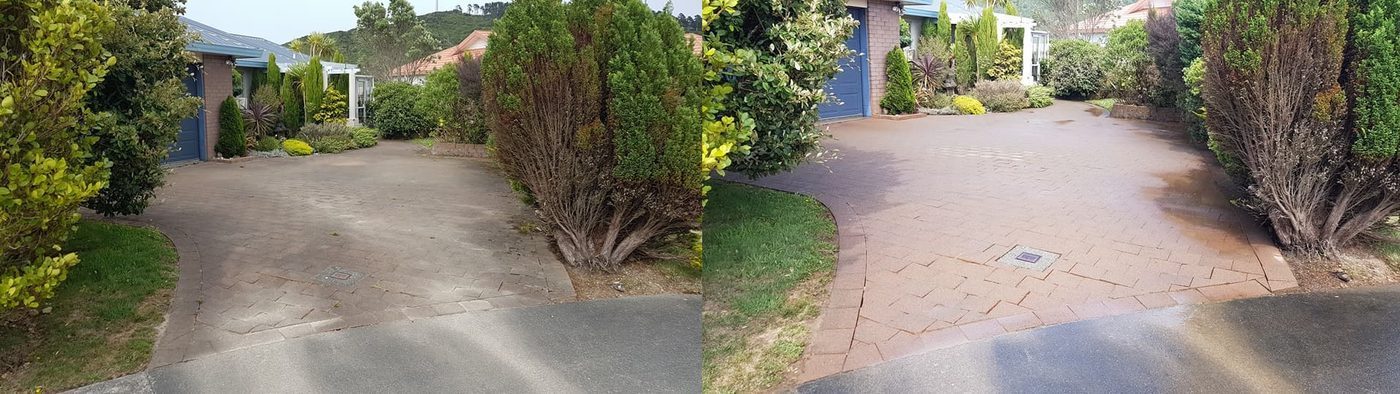
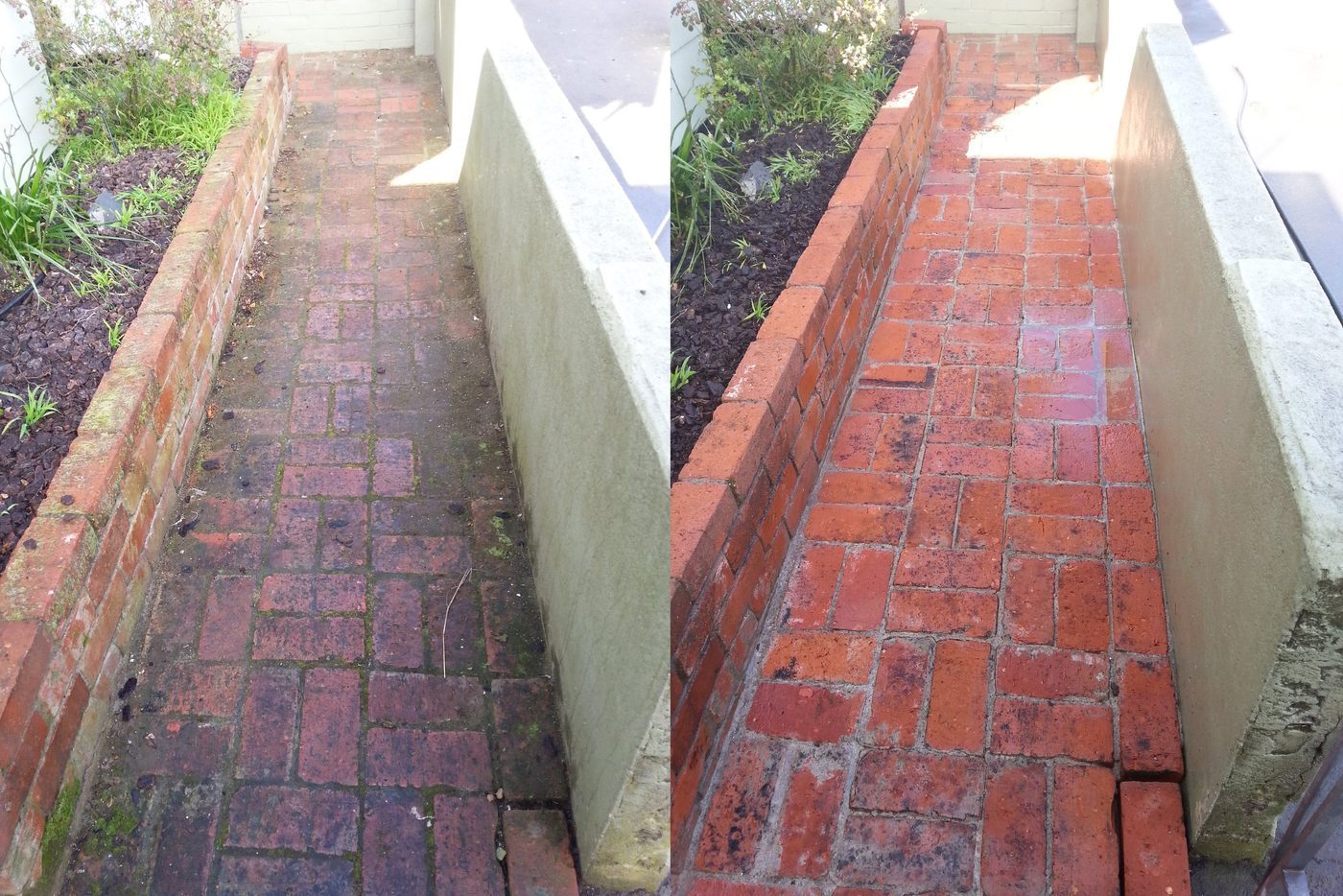
Concrete driveways · paths · paver hardstands · asphalt · bare brick (rare in NZ residential) · bare concrete walls (workshop/garage interior) · cow sheds and rural concrete. Any bare, unpainted, dense hard surface where the water doing the work is the point.
When soft wash is mandatory
Anything painted, coated, sealed or rendered, weatherboard (painted or natural-finish), plaster homes, painted brick (different from bare), roofing of any kind (concrete tile, Decramastic, Coloursteel, terracotta), aluminium joinery, painted timber decks/fences/pergolas, lime-render and heritage finishes. Chemistry does the work; water just rinses.
How to tell what method you’ll get
When you’re quoting:
- Ask directly: “Are you using high-pressure water on the house itself, or soft wash chemistry?”
- Ask about pressure ranges: A confident operator will tell you 200–500 PSI on the house, 2,500+ PSI on the concrete. Vague answers are a warning.
- Ask about the chemistry: Biodegradable, plant-safe, salt-neutralising for coastal homes. If they “just use water”, they’re either lying or they’re going to do a bad job.
- Ask what they won’t do: A skilled contractor will volunteer what surfaces they avoid (asbestos roofs, recently-painted walls, old crumbling mortar). Someone who’ll blast anything is someone you don’t want.
When the job is done:
- Look along the weatherboard from a low angle. No wand lines.
- Check the bottom edges of boards for any visible lift or warping.
- Look at the underside of soffits for water marks where pressure drove water up.
- Smell test. Soft wash chemistry has a mild detergent smell. Heavy chlorine or bleach smell is a different (more aggressive) chemistry that some contractors use to compensate for inadequate dwell time.
Wellington-specific cases that always need soft wash
- Kelburn, Wadestown, Mt Victoria, Roseneath, heritage timber suburbs. High pressure on a 1920s villa is paint-stripping waiting to happen.
- Newlands, Brooklyn, Karori south slopes, south-facing properties where moss has bonded to the paint film. Soft wash + dwell time is the only method that lifts the moss without taking the paint with it.
- Petone, Eastbourne, Lyall Bay foreshore, heritage cottages plus salt-air. Need salt-neutralising soft wash, never high pressure.
- Coloured-press concrete driveways (common in Khandallah, Karori, newer subdivisions), even though it’s concrete, the coloured surface layer is sensitive. Lower pressure plus colour-safe detergent.
The honest bottom line
Water blasting is safe when it’s done on surfaces that can take it (concrete, paths, hard unpainted surfaces) and isn’t safe when it’s done on anything painted, coated or aged.
The right contractor uses both methods, high pressure on the right surfaces, soft wash on the rest, and tells you which is going where before they start. The wrong contractor uses one tool on everything.
If you’re not sure which you’re being quoted for, ask. If the answer is vague, find someone else.
James, Clear Water Blasting. 25 years of using the right method on the right surface.

Written by James · Clear Water Blasting Services
Owner-operated since 2001 from Johnsonville. James does every quote and every job himself across Wellington, the Hutt, Kapiti, Porirua and the Wairarapa.
From the blog
Most recent posts
How to Remove Lichen from a Roof in NZ, The Right Way
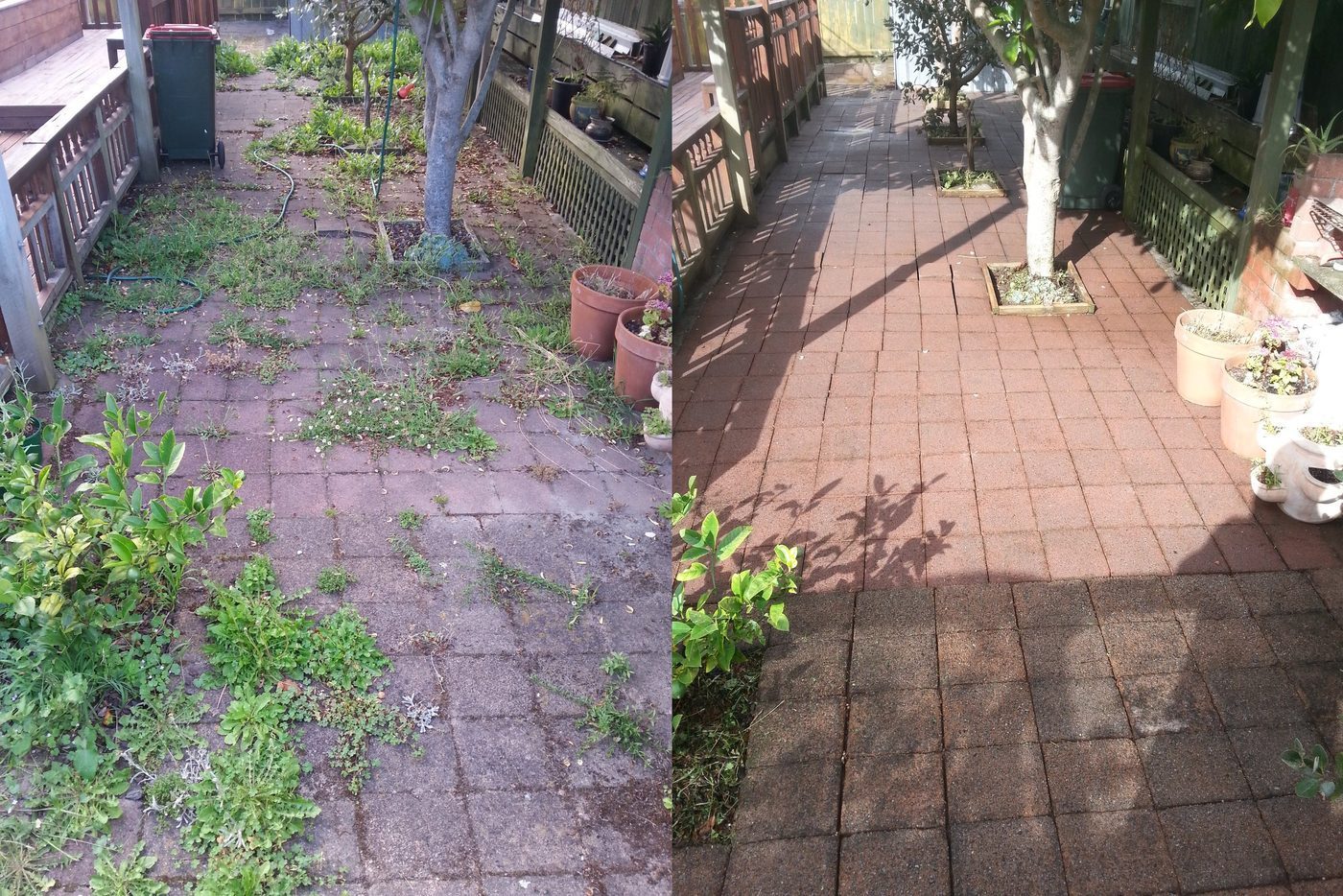
Roof lichen in Wellington? What actually works: a roof-safe biocide, 4–6 weeks dwell time, no water blasting. Full guide for NZ homeowners.
Read →
Wellington gutter cleaning: how often, how much, and what happens if you don't
Wellington's most-requested exterior service, and most-neglected. The full guide: schedule, cost, DIY risks, what happens if you skip it.
Read →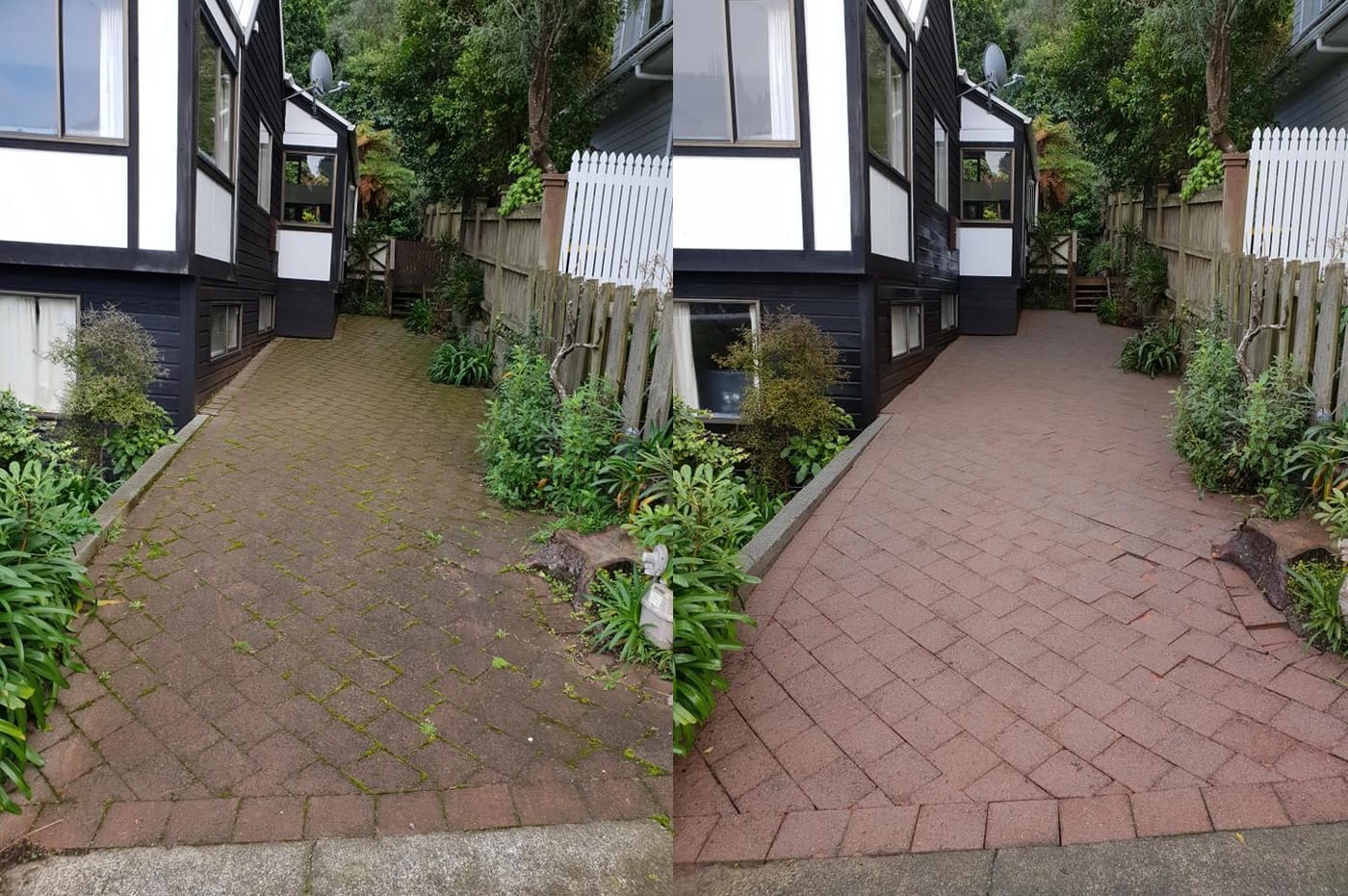
The Wellington homeowner's pre-sale exterior checklist
Real-estate agents agree on one thing: a clean exterior lifts offers. Here's the exact pre-sale checklist for Wellington homes, what to do, when to book it, and what to skip.
Read →