Exterior Washing for Wellington Rental Properties, A Guide for Landlords
End-of-tenancy, pre-listing, annual maintenance. How exterior washing works for Wellington rental stock, documentation, tenant coordination, and what gets neglected.
Rental property exterior cleaning is a landlord responsibility, not a tenant one. The Residential Tenancies Act treats it as maintenance, not damage.
Three common scenarios: end-of-tenancy cleanup, pre-listing wash, and annual landlord-paid maintenance. Each prioritises documentation, turnaround speed, and scheduling around tenants. Skipping it accumulates as paint failure, spouting rot, and premature roof replacement.
- 3rental scenarios where this matters
- 1 wktypical turnaround
- Photosevery job, tribunal-ready
- Annualcadence under RTA maintenance
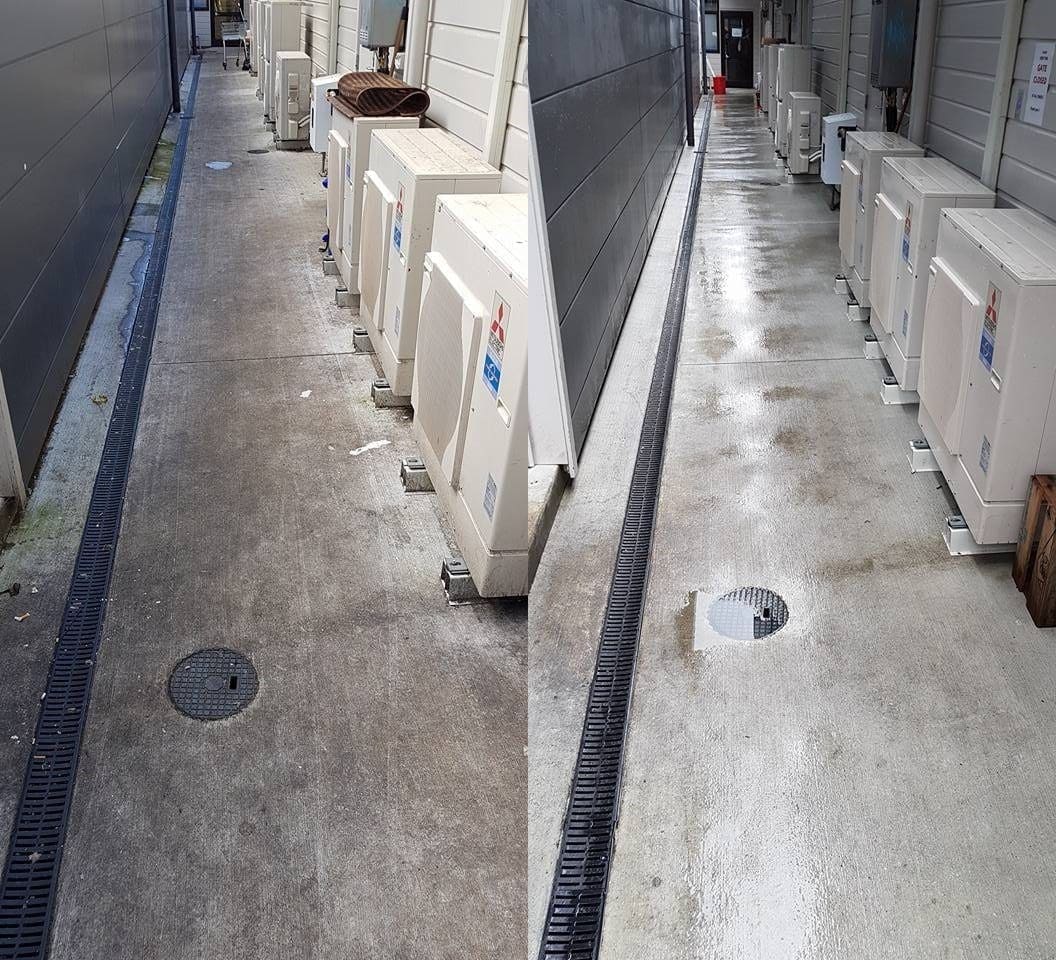
Service alleyway, Whitby Shopping Mall, same maintenance discipline that keeps a commercial body-corp asset in shape applies to rental property portfolios. Documented before-and-after, scheduled around occupants, repeatable annually.
Exterior maintenance on rental properties falls into a gap that costs Wellington landlords more than it should. The logic goes: the tenant is in the property, the tenant is responsible for keeping it clean. That’s partly true, partly not, and the distinction matters.
Inside the property, yes, standard tenant responsibility. The exterior cladding, the roof, the spouting, the concrete surrounds, these are the landlord’s asset. Mould on a weatherboard rental in Mt Vic or Aro Valley doesn’t accumulate because the tenant isn’t sweeping. It accumulates because Wellington is damp, shaded, and biologically productive, and exterior surfaces need regular maintenance regardless of who lives there.
Here’s how to think about the three main scenarios where exterior washing matters for Wellington rental property.
Three rental scenarios, what’s different in each
Scenario 1: End-of-tenancy cleanup
A tenancy ends. The property is inspected. The exterior shows mould, moss, and green algae on the south-facing weatherboard that’s accumulated over the tenancy period.
Is this the tenant’s responsibility? In most cases, not fully. Exterior mould on Wellington cladding in a normally occupied property is standard maintenance wear, not tenant damage. But the condition of the exterior at end-of-tenancy does affect how the property presents at reinspection and to the next tenant.
What exterior washing does in this scenario:
- Resets the property to a clean, presentable condition for the incoming tenancy
- Documents before-and-after condition for the property management file
- Demonstrates active maintenance, which matters if a tenancy tribunal dispute arises about property condition
James provides before-and-after photos as a standard part of every job. For an end-of-tenancy job, these are delivered by email and can be attached directly to your property management software or tribunal evidence file.
Turnaround: most Wellington properties can be scheduled within a week, often sooner. For end-of-tenancy where re-letting is urgent, mention the timeline when requesting a quote.
Scenario 2: Pre-listing wash
The property is going to market, either for sale or re-listing to new tenants. The real-estate agent or property manager wants it looking its best. The exterior hasn’t been cleaned in 18 months or more.
This is the scenario where exterior cleaning has the most measurable impact. A freshly washed exterior photographs better, presents better at inspection, and signals to prospective tenants that the landlord maintains the property. That last point matters for tenant quality, well-maintained properties attract tenants who care about the same.
Timing: coordinate with the agent’s photography timeline. Ideally, the exterior wash happens 3–5 days before photography, long enough for surfaces to dry, not so long that Wellington’s weather has a chance to undo the work.
Scope for pre-listing is typically house exterior, driveway, and paths at minimum. Gutters if they’re visible from the street or showing any staining. Roof if it’s visibly affected and the listing photos will include it.
Scenario 3: Annual maintenance under the landlord-paid clause
The Residential Tenancies Act is reasonably clear that landlords are responsible for maintaining the property in a reasonable state of repair. Exterior cleaning is maintenance, not an improvement, it preserves the paint, the timber, and the cladding system.
An annual or biannual exterior wash is defensible as landlord-provided maintenance. It doesn’t require tenant cooperation (just access to the exterior of the property) and can be scheduled at a mutually convenient time with notice given under the tenancy agreement.
The maintenance plan is worth looking at if you have multiple Wellington rental properties, it sets up a rolling annual schedule across your portfolio so the properties don’t fall out of maintenance cycles.
Why most landlords skip exterior washing, and what it costs
The three excuses that cost landlords money
"The tenant should do it." They don't have professional kit or chemistry. Result: nothing happens, or worse, pressure damage on painted timber.
"It's cosmetic, can wait." After 2–3 years, paint is failing at the surface. After 5, you're prep-painting before any wash works.
"Between tenancies." Gaps get compressed by re-letting urgency. Maintenance debt accumulates.
What annual washing actually preserves
Paint life meaningfully extended, biocide kills mould at the root, not just the surface.
Spouting cleared annually prevents fascia rot ($100s per timber run).
Roof lichen-free preserves 30+ years of service life vs accelerated decay.
Documentation for tribunal disputes, insurance claims, and proof-of-maintenance.
“The tenant should do it.” Tenants don’t have professional-grade equipment or chemistry, and the expectation that they do produces one of three outcomes: they don’t do it (most common), they try and make it worse with a cheap pressure washer on painted timber (occasionally), or they do a reasonable job with a garden hose (occasionally). None of these is as good as a proper biocide wash.
“It’s cosmetic, it can wait.” Mould on painted weatherboard is not cosmetic after the first year. The biological growth holds moisture against the surface, accelerating paint breakdown. After two or three years, the paint is beginning to fail at the surface. After four or five years, the paint requires spot repair before the next wash will do anything useful. The cumulative cost of deferred washing is a bigger painting bill.
“I’ll do it between tenancies.” Sometimes the right approach, but the gap between tenancies is often short, and “between tenancies” gets compressed by re-letting urgency. If washing happens once every two or three tenancies rather than every year, the maintenance debt accumulates.
The cost of exterior maintenance neglect, Wellington rental stock specifics
Wellington weatherboard rental stock is concentrated in Newtown, Kilbirnie, Mt Cook, Aro Valley, Mt Victoria, and Naenae, older housing, often on shaded sections, with significant mould growth risk.
Paint: A professionally washed exterior has its paint life extended meaningfully. An exterior that’s been mould-affected for two or more years needs spot priming before it can be repainted cleanly. That adds to the painter’s prep time and bill.
Spouting (gutters): Blocked spouting causes fascia staining and rot over time. Annual gutter cleaning is among the cheapest preventive maintenance spends for any property. The alternative, fascia replacement, runs into hundreds of dollars per run of timber.
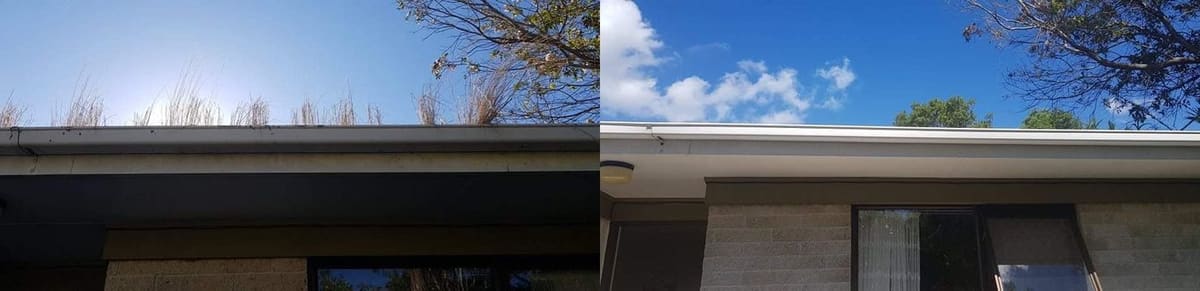
Roof: Lichen on a Coloursteel or concrete-tile roof slowly degrades the surface. On a rental property where roof maintenance gets deferred, a roof that might have had 30+ years of service life gets shortened. Roof replacement costs more than many years of preventive cleaning.
Tax, ask your accountant, not your water blaster
This guide isn't tax advice. Annual exterior washing is generally considered a maintenance expense (deductible against rental income) rather than a capital improvement, but the line is a tax question, not a cleaning one. If you're managing a portfolio, ask your accountant.
What James can tell you is that the job itself, washing, not repainting or replacing, is maintenance work.
Documentation James provides
Standard documentation for every job:
- Before-and-after photos delivered by email within 24 hours of completion
- Photos show all treated surfaces, including specific problem areas (heavy mould zones, stained fascia)
- Job record with date and scope
For end-of-tenancy jobs or those where the documentation may be needed for tribunal or insurance purposes, let James know when booking so photos are thorough and cover the specific areas in question.
Wellington-specific rental stock, the suburbs to pay attention to
Older state housing in Newtown, Kilbirnie, Naenae: Post-war state housing stock, often weatherboard or roughcast on shaded sections. Mould growth is fast and the cladding condition is often more vulnerable than on privately built heritage stock. These properties benefit from regular washing at 12-month intervals.
Weatherboard rentals in Mt Victoria and Aro Valley: Heritage timber, shaded valley or hillside orientation. Soft wash is mandatory. These are the properties where a cheap water-blasting operator causes paint damage and creates repair costs that wipe out years of rent.
Newer rentals in the northern suburbs: Standard exterior cleaning applies, no heritage complication. These are lower-stakes from a method perspective but still benefit from regular maintenance.
Body-corp coordination
If your rental property is in a body-corp complex, exterior cleaning may be the body corp’s responsibility rather than the individual owner’s. Check your body-corp rules before booking. In some complexes, owners can contract individual unit exteriors, balconies, garages, while the main building exterior is handled collectively. James can advise on how to coordinate with body-corp scheduling.
Common questions from landlords
Can the tenant be home during the exterior wash?
Yes. The work is entirely exterior. Tenants don’t need to vacate, they just need to keep windows closed during the cleaning and for a couple of hours after to let surfaces dry. James gives notice the day before as standard.
Who pays, me or the tenant?
For annual exterior maintenance, the landlord. For specific cleaning tasks listed in the tenancy agreement as tenant responsibilities, cleaning windows, sweeping paths, the tenant. The exterior cladding, roof and spouting are the landlord’s maintenance domain.
How much notice do tenants need?
Under the Residential Tenancies Act, landlords must give at least 24 hours notice before entering the property for maintenance or inspection. James works with that, the standard practice is to confirm with the owner, who then notifies the tenant, and James does a reminder text the morning of the job.
Can you do multiple rental properties on the same day?
Yes, with advance planning. For landlords with a portfolio of Wellington rentals, a run can be planned to cover multiple properties efficiently. This is also where the bundle and portfolio pricing from the maintenance plan makes the most sense.
Do you work with property management companies?
Yes. The property manager partnership page covers portfolio pricing, rolling scheduling, and documentation arrangements for property management companies.

Written by James · Clear Water Blasting Services
Owner-operated since 2001 from Johnsonville. James does every quote and every job himself across Wellington, the Hutt, Kapiti, Porirua and the Wairarapa.

From the blog
Most recent posts

House washing in Wellington's coastal suburbs, Lyall Bay, Kilbirnie, Seatoun, Island Bay and Miramar
Why coastal Wellington homes age twice as fast, and what to do about it. A practical guide to salt-spray, southerly exposure and the cleaning regime that actually works.
Read →
Soft wash vs water blasting: which does your house actually need?
Same trade, two very different tools. Soft wash protects painted surfaces; water blasting strips them. Knowing the difference matters.
Read →
Moss treatment in Wellington: soft wash, spray, or scrape, which actually works?
Wellington's damp climate grows moss faster than almost anywhere in NZ. Three treatment methods, which one fits your roof and walls, what each costs, and how long results last.
Read →


