Hutt Valley house washing guide, Lower Hutt, Upper Hutt and the Eastern Bays
Why Hutt Valley homes need a different wash approach. Microclimate, 1940s state-housing cladding, coastal vs inland variation, the regional guide.
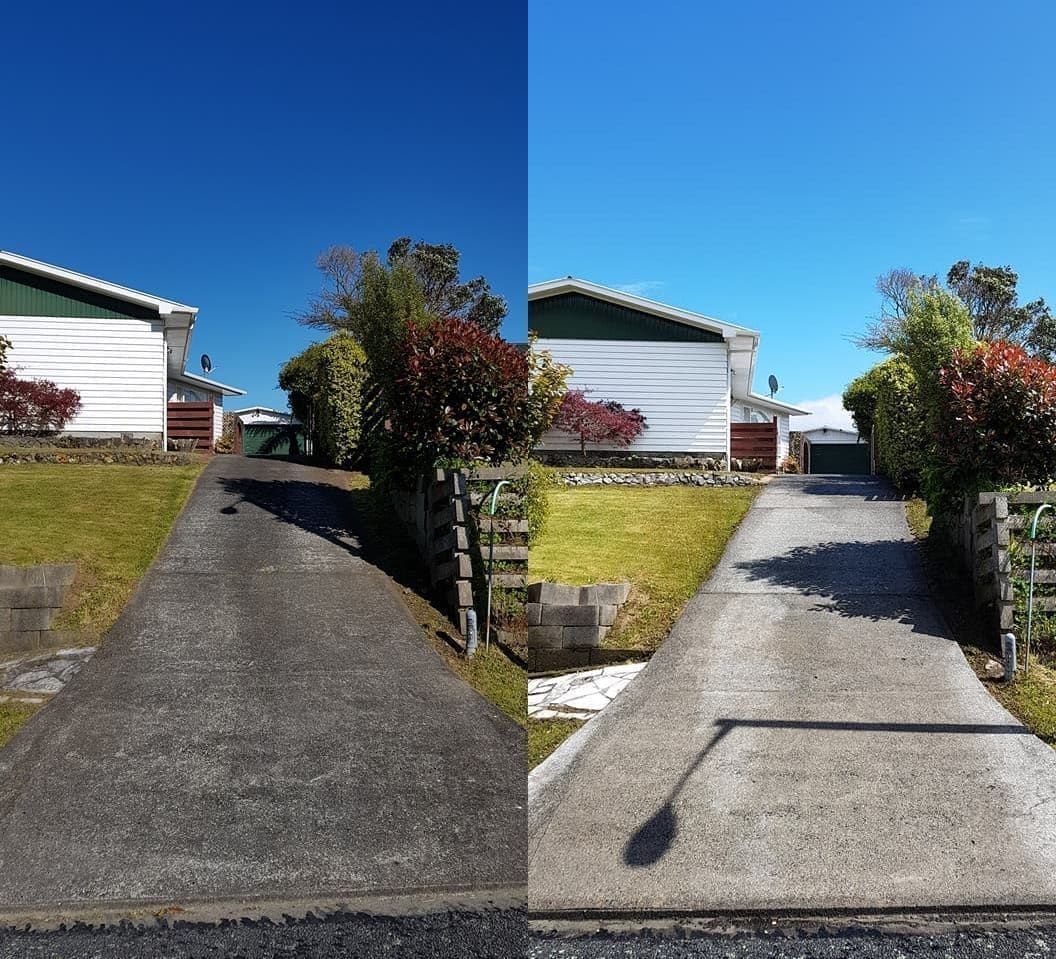
Hutt Valley job to book? Standard Wellington rates apply across the whole valley, send your address for a 24-hour quote.
TL;DR, the Hutt in three sentences. The valley floor sits in a different rain shadow to Wellington central, frosts harder at the head, and holds the highest concentration of 1940s–60s state-built weatherboard in the region. Coastal suburbs (Petone, Eastbourne) need salt-neutralising chemistry. Inland valley suburbs (Wainuiomata, Stokes Valley) need moss and mould chemistry. One quote covers it, no travel surcharge anywhere in the Hutt.
The Hutt Valley is one of those places where “just do what they do in Wellington” doesn’t quite work. James has been cleaning Hutt properties since 2001, from Petone foreshore baches to Silverstream lifestyle blocks, and the pattern is consistent: the same approach that cleans a Brooklyn villa leaves a Wainuiomata weatherboard half-done three months later.
Here’s what’s actually different about the Hutt, and what it means for your property.
The microclimate factor
Wellington proper sits in a wind corridor between the Tararua and Rimutaka Ranges. The Hutt Valley runs north up behind that, and the two microclimates are genuinely different.
- coolerwinter nights at Upper Hutt vs Wellington waterfront
- wetterannual rainfall at the valley head than Wellington central
- moresouth-facing shaded walls in Stokes Valley / Wainuiomata
Rain shadow and frost. The Tararua Range catches a lot of the westerly moisture before it reaches Wellington, but the Hutt Valley gets its own rain from the north-east and from topographic lift as air climbs the valley walls. Upper Hutt averages more frost days per winter than Wellington central, and frost, repeated over a season, drives moisture cycling that accelerates mould growth on anything south-facing and shade-prone.
Sun exposure. The valley floor in Lower Hutt gets decent sun. The valley walls, particularly western-facing slopes above Stokes Valley and south-facing sections in Wainuiomata, can go most of a winter with minimal direct sun. That’s mould country.
Wind. Lower Hutt gets less Wellington-northerly than the waterfront, but Petone and the Eastern Bays get real harbour wind. Salt deposition at Petone foreshore is comparable to parts of the south coast.
Rain shadow note: Upper Hutt sits at the head of the valley where rainfall is noticeably higher than Wellington central. More rain on walls that aren’t drying out quickly equals faster mould turnover, which is why inland Upper Hutt properties often need cleaning at a 12-month interval rather than the 14–18 months that would suit a dry northerly-facing Wellington property.
Suburb-by-suburb
Petone
Petone foreshore is coastal Wellington in everything except the map label. The harbour runs right along Jackson Street’s back end, and the prevailing harbour winds carry salt spray across foreshore properties and into the Petone flats as far as a kilometre inland on a good blow. Heritage timber bungalows on Buick Street and Seaview Road need soft wash only, no high pressure on century-old painted weatherboard. James schedules Petone foreshore jobs on the same 10–12 month salt-neutralising cycle as Island Bay and Seatoun.
Eastbourne
Eastbourne sits along the Eastern Bays in a genuinely coastal position, the harbour foreshore on one side, the Remutaka hillsides behind. Heritage baches and converted holiday homes (many now permanent residences) get full harbour salt exposure. The winding access from Lower Hutt doesn’t add to the quote, James covers Eastbourne and Days Bay regularly as part of the eastern sweep. Same regime as Petone: salt-neutralising chemistry, 10–12 month cycles for foreshore properties, 12–14 months for those a few streets back.
Stokes Valley
Stokes Valley faces south-west at the base of the Tararua foothills, and the combination of orientation, elevation and shade means the moss load here is among the heaviest James sees in the region. Moss establishes on roofs, walls, fences and concrete paths year-round because sections of the suburb barely get direct sun in winter. The roof cleaning and house wash almost always make sense bundled here, the roof is invariably the worst surface, and cleaning it without attending to the walls just moves the problem around.
Wainuiomata
Wainuiomata is the inland frost-belt suburb the Hutt. The road over the Wainuiomata Hill gives a clue to the different microclimate, the valley floor behind the hill is sheltered from harbour wind but catches cold air pooling in winter, and the south-facing slopes above the suburb floor hold moisture through the whole of winter. 1970s–80s weatherboard and fibre-cement cladding is common here, and mould colonises it aggressively. James typically quotes Wainuiomata properties at 12-month intervals and uses a mould-inhibiting wash chemistry as standard.
Wainuiomata south-facing walls: If a wall faces south and is shaded by a neighbouring structure or fence, mould can return within 6 months of a standard wash. For persistent-mould situations James can apply a residual biocide treatment that extends the clean result by 3–4 months, worth discussing on quote.
Naenae
Naenae is one of the Hutt Valley’s most distinctive housing patches, the 1940s–50s state housing scheme left long streets of weatherboard bungalows that are now a mix of original, modernised and replaced. The weatherboard is predominantly rimu or macrocarpa with oil-based paint, old, but generally sound if maintained. The challenge is that the plaster infill sections (some original plaster, some later fibre-cement patches) need attention to pressure settings. James treats Naenae as a mixed-cladding suburb: default to soft wash pressure on the older stock, with judgement calls on the handful of fully-replaced modern clads.
Lower Hutt Central / Hutt Central
The suburban core around the Hutt CBD mixes modern townhouses, 1960s–80s brick-and-tile, and converted commercial buildings. Less moss pressure than the valley walls, but traffic-generated grime from High Street and the railway corridor builds up on any north-facing or exposed surface. House washing in Hutt Central is straightforward, the access is good, the housing mix is manageable. Most jobs run on a 14-month cycle unless the property is close to the river or within wind-fetch of the harbour.
Upper Hutt Central
Upper Hutt’s residential core runs around the main street and spreads into a mix of subdivisions from the 1950s through to new builds behind Wallaceville. The housing era variety means James checks cladding type on every Upper Hutt quote, brick-and-tile 1970s homes, painted weatherboard 1950s bungalows, and modern Linea or Hardie panel cladding all sit on the same street sometimes. Standard soft wash across the board; pressure and dwell time adjusted per cladding.
Silverstream
Silverstream and the adjacent Heretaunga flats are newer-subdivision territory, 1990s and 2000s group-build housing on the valley floor. Treated-pine fence runs are a Silverstream feature: long boundary fences that accumulate green algae, particularly on the shadier aspects. Fence and deck cleaning bundles well here with the house wash. North-facing walls on valley-floor sections stay cleaner longer, but the fences are almost universally green within 18 months of a clean. James schedules Silverstream at 14-month house wash intervals, with fence cleans on the same visit.
Heretaunga and Trentham
Lifestyle block territory, larger sections, more rural character, sometimes outbuildings and wool sheds on the fringe. The houses themselves clean on normal residential schedules (12–14 months), but Heretaunga and Trentham properties often bundle in driveway cleaning given the longer concrete or chip-seal driveways. Moss on long concrete paths is the most common request alongside the house wash.
The 1940s-era state-housing wash
This deserves its own section because it’s genuinely the most common specialist question James gets from the Hutt.
The 1940s–50s Housing Corporation weatherboard that dominates Naenae, Taita, Pomare and parts of Stokes Valley is almost uniformly rimu framing and weatherboard with oil-based paint over the top. The paint has typically been repainted multiple times, and the outer layer may be water-based over oil, which changes the wash approach.
- Soft wash at 500–800 PSI maximum, no direct pressure on old painted surfaces
- Low-alkaline detergent to lift biological growth without attacking the paint film
- Dwell time of 10–15 minutes before rinse
- Downward-angle wand to avoid driving water under the weatherboard laps
- Post-wash inspection of any peeling sections, noted on the after-photos
- High-pressure direct blast, lifts paint, drives water into framing
- High-alkaline detergent, strips oil-based paint films
- Upward-angle spray under laps, causes internal moisture
- Skipping the dwell time, misses the biological growth that's actually staining the surface
The biggest thing that goes wrong with old Hutt weatherboard is a well-meaning owner hiring someone with a petrol pressure washer and a single flat tip. The paint comes off in strips. Once that happens you’re repainting before the summer is out.
When to book
- Sep–Novbest window, growth slows, surfaces dry fast, results hold longer
- Mar–Aprsecond window, post-summer grime, before the long winter growth cycle
- 14 daystypical lead time for Hutt Valley bookings during peak spring season
The valley microclimates mean the Hutt goes into biological-growth mode earlier in autumn than Wellington central, the frost belt end of Upper Hutt can start getting moss on north-facing surfaces by April, which is unusual compared to coastal Wellington. Spring cleaning (September–October) gives you the longest clean window before the next winter cycle, and post-summer cleaning in March–April removes the grime before the heavy growth season starts.
Set a cadence and forget it. The easiest way to manage a Hutt Valley exterior is to lock in the annual maintenance plan, James revisits on the same schedule each year, adjusts the chemistry to what the property needs that season, and you don’t have to think about it. Most Hutt customers are on 12-month cycles; lifestyle block properties on 14 months.
Bundle: house wash and gutters
The Hutt Valley’s tree cover, particularly the older suburbs with mature poplars, willows and oaks along the river corridor, means gutters fill faster here than in Wellington’s newer treeless subdivisions. James almost always recommends combining the house wash and gutter clean in the Hutt for three reasons:
- The gutter debris (autumn leaves, seed pods) stains weatherboard if it overflows and runs down the fascia, cleaning both in the same visit solves this.
- The scaffold or ladder is already up; the marginal cost of doing gutters is low.
- A blocked downpipe feeding damp into a 1940s timber subfloor is a far more expensive problem than a bundle service.
Most Hutt Valley quotes include a gutter-and-house-wash bundle price alongside the individual service price, the bundle is typically $80–120 cheaper than booking them separately.
FAQs
Does James travel to Eastbourne and the Eastern Bays? Yes, Eastbourne, Days Bay, Sunshine Bay and Mahina Bay are all standard service area with no travel surcharge. James typically batches Eastern Bays jobs into the same run to keep things efficient.
What’s the price difference between a Hutt Valley job and a Wellington Central job? There isn’t one, same pricing model, no regional surcharge. A three-bedroom weatherboard in Naenae prices the same as a comparable property in Newtown.
My Wainuiomata house gets mould back within a year. Is that normal? For south-facing walls in a shaded valley position, yes, 10–12 months between return of light mould is typical without a residual treatment. With a post-wash biocide application James can extend that to 15–18 months. Worth discussing on the quote.
Can you wash a 1940s Naenae weatherboard without stripping the paint? Yes, if the paint is reasonably sound. James assesses the paint condition before touching the surface, any sections where the paint is already lifting or blistering get noted and worked around with reduced pressure. Any paint that comes off in the wash was already failing; the wash is revealing it, not causing it.
Do you clean commercial properties in Lower Hutt CBD? Yes, the commercial cleaning service covers Hutt Central storefronts, retail strips and body corporate buildings. Quote on application for commercial work.
How much does a Hutt Valley house wash cost? The same as comparable Wellington properties, roughly $280–500 for a three-bedroom single-storey home depending on cladding, moss load and access. James quotes off your address and some photos; quote is back within a few hours.
James, Clear Water Blasting Services. Cleaning Hutt Valley properties since 2001.

Written by James · Clear Water Blasting Services
Owner-operated since 2001 from Johnsonville. James does every quote and every job himself across Wellington, the Hutt, Kapiti, Porirua and the Wairarapa.

From the blog
Most recent posts

House washing in Wellington's coastal suburbs, Lyall Bay, Kilbirnie, Seatoun, Island Bay and Miramar
Why coastal Wellington homes age twice as fast, and what to do about it. A practical guide to salt-spray, southerly exposure and the cleaning regime that actually works.
Read →
Soft wash vs water blasting: which does your house actually need?
Same trade, two very different tools. Soft wash protects painted surfaces; water blasting strips them. Knowing the difference matters.
Read →
Moss treatment in Wellington: soft wash, spray, or scrape, which actually works?
Wellington's damp climate grows moss faster than almost anywhere in NZ. Three treatment methods, which one fits your roof and walls, what each costs, and how long results last.
Read →


