Washing a Heritage Villa or Weatherboard in Wellington, What's Safe, What's Not
Heritage timber needs soft wash only, no high pressure on painted weatherboard. What damages old paint, how soft wash works, and the lead-paint consideration.
Heritage timber = soft wash only. No high pressure on painted weatherboard, ever.
The safe method is 200–500 PSI maximum, biocide chemistry at low pressure, careful staging around windows and joinery, dwell time for the chemistry to work. High-pressure blasting on old painted timber causes paint failure, forces moisture under the cladding, and creates problems considerably worse than dirty-looking walls.
- 200–500PSI for soft wash (heritage-safe)
- 2,000–3,000PSI a water blaster, too high for paint
- 10–20 minbiocide dwell time
- $5–15ktypical repaint cost if you wreck the paint
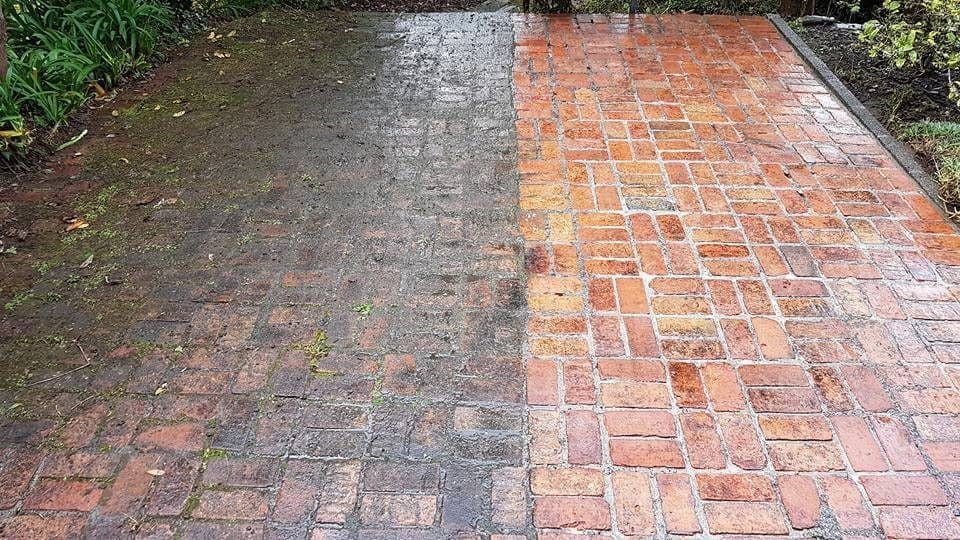
Heritage villa needing a careful wash? Send through your address or ring James on 0274 055 110, soft-wash quotes back inside 24 hours.
Thorndon, Mt Victoria, Aro Valley, Kelburn. These suburbs have some of the most beautiful residential streetscapes in New Zealand, and some of the most easily damaged if cleaned the wrong way.
Wellington’s heritage character homes are typically 1900s–1930s timber construction: tongue-and-groove weatherboard, double-hung sash windows, ornate bargeboards, wide verandahs with turned posts. They’re built to last, and many have lasted well over a century. But the paint systems on them, often many layers deep, applied over decades, don’t respond well to high-pressure water.
The question James gets asked constantly about these properties is: “Can you water blast it?” The honest answer is no, not with conventional water blasting pressure. Here’s why, and what the right method actually looks like.
What “heritage” means in Wellington’s context
Heritage in Wellington residential stock typically refers to pre-WWII construction, most commonly:
- 1890s–1910s villas, symmetrical façades, decorative vergeboard, bay windows, wide covered verandahs. Heavily concentrated in Thorndon, Mt Victoria, Newtown, and parts of Mt Cook.
- 1920s–1930s bungalows, lower pitched roof, wider proportions, often Californian bungalow influence. Common across Kelburn, Hataitai, Roseneath, and Wadestown.
- Character cottages, smaller footprint, often in Aro Valley and parts of Te Aro, sometimes mid-century state-housing stock.
All of these share the same relevant characteristic: painted timber weatherboard cladding, accumulated paint layers, and joinery that has been resealed and repainted multiple times. The paint system is often brittle at the surface and soft underneath, especially where moisture has been cycling in and out of the timber for decades.
What high-pressure water blasting does to old paint
This is not a theoretical concern. It's the most common damage James encounters on post-quote site visits where a homeowner tried DIY or booked a cheaper operator who didn't know the property type.
High-pressure water blasting on old painted weatherboard:
Lifts paint at the overlap. Weatherboard is lapped, each board overlaps the one below it. High-pressure water directed horizontally strips paint from the top edge of the overlap and forces water behind the board. That moisture has nowhere to go quickly.
Drives water into the wall cavity. Wellington’s weatherboard heritage homes are not vapour-barrier construction, they breathe through the walls. Water driven in under pressure can sit in the cavity against the framing, leading to mould in the wall itself.
Strips softened paint. Old paint that has any age-related softening (chalking, checking, alligatoring) gets pressure-stripped in patches. Now you have bare timber exposed, which swells and stains before you can repaint. The exterior looks worse than before cleaning.
Blows out putty around windows and joinery. Old putty around sash windows and ornate joinery is often at the end of its service life. High-pressure water directed around window frames destroys the seal, lets water behind the frame, and leads to rot in the sill and frame.
None of this is recoverable without repainting, which costs considerably more than a soft wash.
The soft-wash method, step by step
Soft wash uses low pressure (typically 200–500 PSI, several times a normal garden-hose pressure but a tiny fraction of high-pressure blasting at 2,000–3,000 PSI) combined with a biocide chemistry that does the actual cleaning work.
Here’s how James approaches a heritage weatherboard property:
1. Pre-inspection. Walk the property, note any paint failure, loose boards, damaged joinery, or areas where the cladding has already been compromised. These areas need extra care or skipping entirely. Any pre-existing damage is photographed before work starts, this matters for insurance and dispute purposes.
2. Cover and protect. Downward-facing vents, any electrical fittings at ground level, and garden beds that need protection from runoff. Heritage homes often have older electrical equipment that should not get wet.
3. Low-pressure chemistry application. The biocide solution goes on at low pressure, working down from top to bottom. The chemistry kills mould, lichen and algae at the root, not just on the surface. This is what prevents regrowth within weeks.
4. Dwell time. The chemistry needs time to work. Depending on temperature and the extent of biological growth, this is typically 10–20 minutes. Heritage jobs often have more established mould growth, so dwell time is important.
5. Low-pressure rinse. Rinse from top to bottom, keeping the spray angle away from horizontal and away from any board overlaps and joinery. No direct high-pressure contact with paint edges.
6. Post-clean check. Walk the property again, check windows and joinery for any water ingress, confirm the cleaned surfaces look right. Note any paint or cladding issues for the homeowner’s information.
7. Before-and-after photos. Standard for all jobs, particularly useful for heritage properties where there can be questions about pre-existing versus post-clean condition.
Suburbs with the heaviest heritage stock
Wellington’s heritage residential zones are well-defined. If your property is in one of these suburbs, soft wash is almost certainly the right method:
- Thorndon, the oldest residential suburb in Wellington, Tinakori Road precinct, parliament-adjacent character housing
- Mt Victoria, hillside streets, established gardens, dense heritage stock
- Aro Valley, shaded valley microclimate, some of the fastest mould cycling in Wellington
- Kelburn, cable-car ridge, premium heritage, exposed to prevailing westerlies
- Wadestown, ridge suburb, heritage and character mix
- Mt Cook, heritage villas alongside mid-century apartment stock
- Hataitai, bungalow-heavy, pre-WWII residential character
- Roseneath, similar character to Hataitai and Oriental Bay surrounds; see the areas index for coverage
These are also the suburbs where getting the method wrong is most expensive. A paint job on a Thorndon villa runs thousands of dollars. Avoiding pressure damage is worth it.
The lead paint consideration
Properties built or substantially painted before 1970 may have lead-based paint somewhere in the paint system. In Wellington, that covers a significant proportion of the heritage housing stock, a 1910 villa that’s been maintained but not stripped will have lead in the lower layers.
For exterior cleaning, the main concern with lead paint is runoff management. Even with soft wash, chemistry dislodges paint particles and biological material that ends up in the runoff. On a heritage property with suspected lead paint:
- Runoff should be directed away from garden beds, especially those with vegetables or herbs
- James uses chemistry formulations that are low-toxicity and biodegradable, which helps with general runoff management
- If the property is in a heritage zone and there’s a known lead-paint remediation plan in place, coordinate the exterior clean so it doesn’t happen immediately before paint stripping work
This isn’t cause for alarm on a standard soft wash, the lead exposure risk from exterior cleaning is low compared with sanding and stripping. But it’s worth knowing, and James can discuss the approach for specific properties.
DIY vs professional, the honest comparison
DIY is viable if…
You have a soft-wash attachment for a garden hose, you've sourced a quality biocide (not hardware-store grade), you understand the 200-500 PSI limit and won't be tempted to crank it up when the chemistry seems slow, and you're confident around old paint. Cost: $80-150 materials + half-to-full day's work.
Hire out if…
Two-storey property, significant ornate detailing, known paint issues, lead-paint era home, or you want documentation for property records. Cost: $380-650 for a typical heritage villa, 2-4 hours, professional-grade biocide that lasts longer.
The main DIY risk isn't the cleaning itself, it's the temptation to increase pressure when the chemistry alone seems slow. Don't. Let the chemistry work. The 200-500 PSI limit exists for a reason.
The professional case is clear if the property is two-storey, has significant ornate detailing, has known paint issues, or you want documentation for property records.
Roof considerations on heritage homes
Heritage homes in Wellington typically have one of three roof types, and none of them should be water blasted:
Concrete tiles (Mediterranean/terracotta profile). Common on character bungalows from the 1920s–1960s. Water blasting strips the protective surface layer and accelerates degradation. Low-pressure biocide treatment only.
Decramastic tile. Steel tile panels with a stone-chip surface coating. Water blasting strips the chips. Decramastic roofs should never see high pressure, biocide treatment and a gentle rinse is the maximum safe method.
Terracotta tiles. Uncommon but present on some older Wellington villas. Fragile when aged. Hand-treatment or low-pressure only.
In all cases, roof cleaning on a heritage home is a slow, careful job. If a contractor quotes quickly on a roof clean for a heritage property without asking about the roof type, that’s worth querying.
Common questions about heritage home washing
Will the paint come off?
With soft wash at correct pressure, no. The chemistry loosens mould and algae; the low-pressure rinse removes it. Soft wash does not strip intact paint. If paint is already failing, flaking, bubbling, chalking badly, it will reveal that pre-existing condition. That’s not damage caused by cleaning; it’s damage that was already there.
Can you do a Thorndon villa?
Yes, regularly. Thorndon is probably the most common suburb for heritage soft-wash work. The Tinakori Road precinct and the streets running off it have a lot of heritage residential stock, and it’s one of the suburbs where getting the method right matters most.
Do you handle lead-paint-era homes?
Yes. The soft-wash method is appropriate for pre-1970 painted surfaces as long as the chemistry and pressure are right. James can discuss runoff management and pre-existing paint condition when quoting for older properties.
How long until the mould comes back?
On a properly treated surface, you’d expect 12–24 months before visible regrowth depending on the property’s shading and microclimate. Aro Valley properties in heavy shade tend toward the shorter end of that range. Kelburn properties in open westerly exposure tend toward the longer end. Biocide slows regrowth; it doesn’t permanently prevent it.
Can soft wash damage plants and gardens?
The chemistry James uses is biodegradable and low-toxicity, but it’s still a biocide, it kills what it’s designed to kill. Garden beds near the house are protected or rinsed thoroughly. Any specific concerns about particular plants should be flagged at quote stage.

Written by James · Clear Water Blasting Services
Owner-operated since 2001 from Johnsonville. James does every quote and every job himself across Wellington, the Hutt, Kapiti, Porirua and the Wairarapa.
From the blog
Most recent posts

House washing in Wellington's coastal suburbs, Lyall Bay, Kilbirnie, Seatoun, Island Bay and Miramar
Why coastal Wellington homes age twice as fast, and what to do about it. A practical guide to salt-spray, southerly exposure and the cleaning regime that actually works.
Read →
Soft wash vs water blasting: which does your house actually need?
Same trade, two very different tools. Soft wash protects painted surfaces; water blasting strips them. Knowing the difference matters.
Read →
Moss treatment in Wellington: soft wash, spray, or scrape, which actually works?
Wellington's damp climate grows moss faster than almost anywhere in NZ. Three treatment methods, which one fits your roof and walls, what each costs, and how long results last.
Read →


